Code Without Borders: The Decentralized Engineers Quietly Rewriting the Rules of Innovation
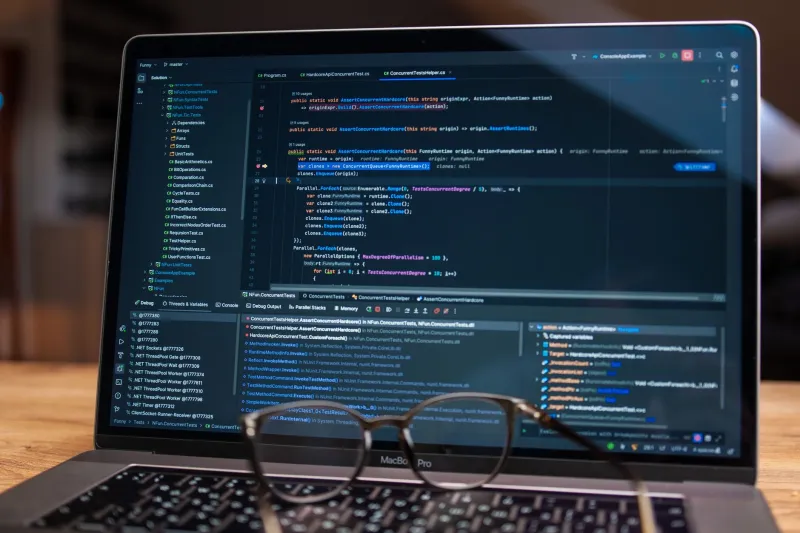
In a rented apartment in Austin, a software engineer named Marcus spends his evenings contributing to a robotics simulation framework used by research teams at three continents' worth of universities. He has never met most of his collaborators. He receives no salary for this work. And the software his community has built is, by several technical measures, more capable than comparable proprietary tools sold by companies with nine-figure R&D budgets.
Marcus is not unusual. He is representative of a movement that has been gaining momentum for years but is now reaching an inflection point — one with significant implications for how the United States thinks about technological leadership, competitive advantage, and the institutional structures that produce meaningful innovation.
The Myth of the Corporate Lab
For most of the twentieth century, the dominant model of technological progress was institutional. Bell Labs gave us the transistor. Xerox PARC gave us the graphical user interface. IBM's research divisions shaped the foundations of modern computing. The assumption embedded in this history was that breakthrough innovation required concentrated resources, coordinated teams, and organizational infrastructure that only large corporations or government agencies could provide.
That assumption is being systematically dismantled — not through argument but through output.
Consider the landscape of modern artificial intelligence. While OpenAI, Google DeepMind, and Anthropic command enormous attention and even larger capital raises, some of the most technically significant developments in the field have emerged from open-source communities. Meta's release of the LLaMA model family, which was subsequently fine-tuned and extended by thousands of independent contributors, accelerated AI capabilities across research and commercial applications in ways that no single corporate roadmap could have anticipated or directed. The Hugging Face platform, built largely on community contributions, has become a de facto infrastructure layer for machine learning practitioners worldwide — including many working inside the very corporations it ostensibly competes with.
In cryptography, the story is similar. The cryptographic protocols that secure billions of dollars in financial transactions, protect sensitive communications, and underpin blockchain infrastructure were largely developed through open academic and community processes. The engineers advancing zero-knowledge proof systems — one of the most consequential areas of applied cryptography today — are distributed across universities, independent research collectives, and volunteer contributor networks that operate with minimal corporate oversight.
Why Decentralization Produces Depth
The counterintuitive superiority of open-source communities in certain domains of innovation can be explained by several structural dynamics that corporate environments struggle to replicate.
Motivation architecture is fundamentally different. Engineers contributing to open-source projects are self-selected for genuine interest in the problem space. They are not navigating quarterly performance reviews, organizational politics, or product roadmaps defined by market research. This intrinsic motivation produces a quality of sustained intellectual engagement that is difficult to manufacture through compensation alone. As one contributor to the Rust programming language ecosystem described it: "I work on this because it is genuinely the most interesting problem I know of. No one has to remind me to care."
Failure is cheaper and faster. Corporate R&D environments carry institutional risk aversion that shapes which experiments get funded and which get abandoned. Open-source communities can pursue speculative directions with minimal bureaucratic friction. Ideas that would never survive an enterprise product review process can be tested, refined, and occasionally proven transformative by a handful of motivated individuals working outside any formal organizational structure.
The talent pool is global and non-credentialed. Major technology companies recruit aggressively from a relatively narrow set of institutions and backgrounds. Open-source communities draw contributors from every country, every educational background, and every professional context. This diversity of perspective — genuine cognitive diversity, not just demographic representation — produces problem-solving approaches that homogeneous teams reliably miss.
The Competitive Implications for American Tech
For US technology companies and policymakers, the rise of decentralized innovation presents a complex strategic picture.
On one hand, American engineers and institutions are disproportionately represented in the most influential open-source communities. The cultural and legal environment in the United States has historically been relatively hospitable to open collaboration, and many of the platforms and protocols that enable distributed development were built here. This is a form of soft technological leadership that does not appear in any company's revenue figures but shapes the global innovation ecosystem profoundly.
On the other hand, the open-source model creates genuine vulnerabilities. Software that is freely available to everyone is available to geopolitical competitors as well as allies. The LLaMA models referenced earlier are as accessible to engineers in Beijing as they are to those in Boston. The cryptographic tools advancing privacy and security can also advance adversarial capabilities. The decentralized nature of open-source communities makes export controls, IP protections, and other traditional mechanisms of technological advantage largely inapplicable.
This tension does not have a clean resolution. It reflects a fundamental characteristic of the current technological moment: the tools of innovation are increasingly public goods, and the advantage accrues not to those who control access but to those who can most effectively deploy, extend, and apply.
What Startups Can Learn — and What They Risk Missing
For venture-backed startups navigating this landscape, the open-source ecosystem is simultaneously an asset and a strategic puzzle.
The asset is obvious: startups can build on open-source foundations that would have required years of internal development a decade ago. The entire stack of modern AI application development — from model weights to training frameworks to deployment infrastructure — is largely available without licensing fees. This dramatically compresses the time and capital required to reach technical viability.
The strategic puzzle is subtler. When your core technology is built on open-source components that are equally available to every competitor, the question of differentiation becomes urgent. The answer, increasingly, is not the technology itself but the application layer: the domain expertise, the user experience design, the data relationships, and the organizational knowledge required to deploy that technology effectively in specific contexts. Startups that understand this — that their moat is not the model but the system surrounding it — are positioning themselves more durably than those still chasing proprietary algorithmic advantage.
The Horizon Ahead
The engineers working without borders — in apartments in Austin, in co-working spaces in Chicago, in university labs in Ann Arbor — are not waiting for permission to build the future. They are building it incrementally, collaboratively, and largely outside the spotlight that the technology press trains on funded startups and corporate announcements.
This is not a story about the death of institutional innovation. Bell Labs-style concentrated research still produces important work, and the resources available to large technology companies enable certain kinds of long-horizon research that distributed communities cannot easily replicate. But it is a story about the democratization of innovation capacity — and about the degree to which the next generation of transformative technology may emerge from places and people that no venture capital thesis anticipated.
For anyone serious about understanding where digital reality is being engineered, the open-source communities deserve as much attention as any corporate R&D announcement. Often, they deserve considerably more.