The New Site Selection: Why AI Infrastructure Now Begins at the Substation
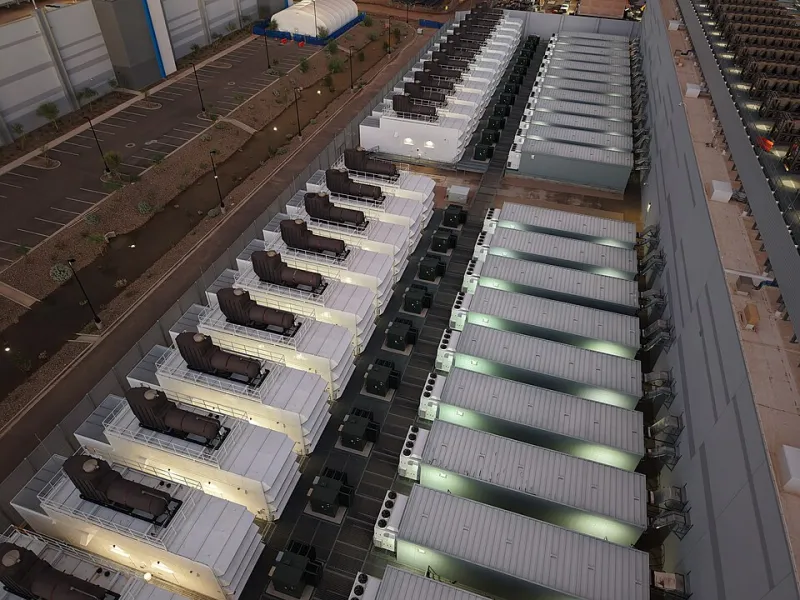
Photo: Rsparks3, CC0, via Wikimedia Commons
Cloud strategy used to begin with a map of regions. In 2026, it begins with a map of power. The AI buildout has turned data center planning into an energy procurement exercise, and the enterprises that treat it as a software problem are already behind. The binding constraints are no longer just chips and models. They are interconnection queues, utility contracts, water rights, and local permits.
From Cloud Regions to Interconnection Queues
For a decade, the default assumption was that compute would be available wherever a cloud provider had a region. That assumption is fraying. Large loads now wait years for grid interconnection in many parts of the United States, and the queue is not a formality. It is a schedule. A project that cannot secure power cannot train, serve, or scale, regardless of how elegant its model architecture looks on a slide.
The architectural consequences are real. A workload that must train in one region and serve in another carries latency, egress, and compliance costs. A real-time inference service that depends on a distant data center may fail the millisecond test that customers feel. An enterprise that assumes colocation capacity will be available on demand may find itself negotiating from a weak position.
The Three Contracts Behind Every AI Workload
Every AI infrastructure plan now rests on three contracts that rarely appear in architecture diagrams.
The first is the utility contract. Rate structure, demand charges, capacity commitments, and upgrade timelines shape the economics of a workload as much as GPU pricing does. The second is the permit. Local zoning, environmental review, and community approval determine whether a site can be built at all. The third is the water contract. Cooling requirements are becoming a public issue, and in water-stressed regions they are a scheduling risk.
Community opposition is not a public relations problem. It is a delivery risk. When local boards slow or reject a data center project, the enterprise that depends on it inherits the delay. That risk belongs in the architecture review, not in the communications plan.
Why Talent Follows Power
The conventional wisdom was that AI infrastructure follows talent. Talent still matters, but distributed teams have made geography more flexible than it once was. Electrons are not flexible. They must be generated, transmitted, permitted, and paid for in a specific place. In 2026 planning, where the power is may matter more than where the talent is.
That does not mean talent is irrelevant. It means the constraint has moved. A company can hire remote engineers across time zones. It cannot remote a substation.
A Power-First Due Diligence Checklist
Enterprises should add a power-first layer to infrastructure due diligence. The checklist is not exotic, but it is often skipped.
- Queue position and upgrade costs: how long will interconnection take, and who pays for grid upgrades?
- Rate structure and demand charges: what does the load profile cost at peak, and how flexible must the workload be?
- Water and cooling: what is the source, the permit, and the community sensitivity?
- Local permits and political risk: who approves the site, and what is the timeline?
- Resilience and backup: what happens when the grid is stressed, and what redundancy is required?
- Workload flexibility: can training move to where power is cheap, while inference stays close to users?
- Exit terms: what happens if the site, utility, or partner changes ownership?
The answers should shape architecture, not follow it. Energy-aware scheduling, batch training in power-rich regions, and edge inference for latency-sensitive services are becoming standard design choices. Behind-the-meter generation and power purchase agreements can help, but they are not a substitute for grid literacy.
Architecting for Energy Reality
The grid is the new cloud in the sense that it is now the platform on which AI strategy depends. It is not a metaphor. It is a set of physical and contractual constraints that reward planning and punish assumptions.
DreamBit's view is that the next generation of enterprise architecture reviews will include an energy appendix. The companies that treat power procurement as an engineering discipline will build faster, cheaper, and with fewer surprises. The ones that treat it as a facilities afterthought will discover that the cloud was never weightless.